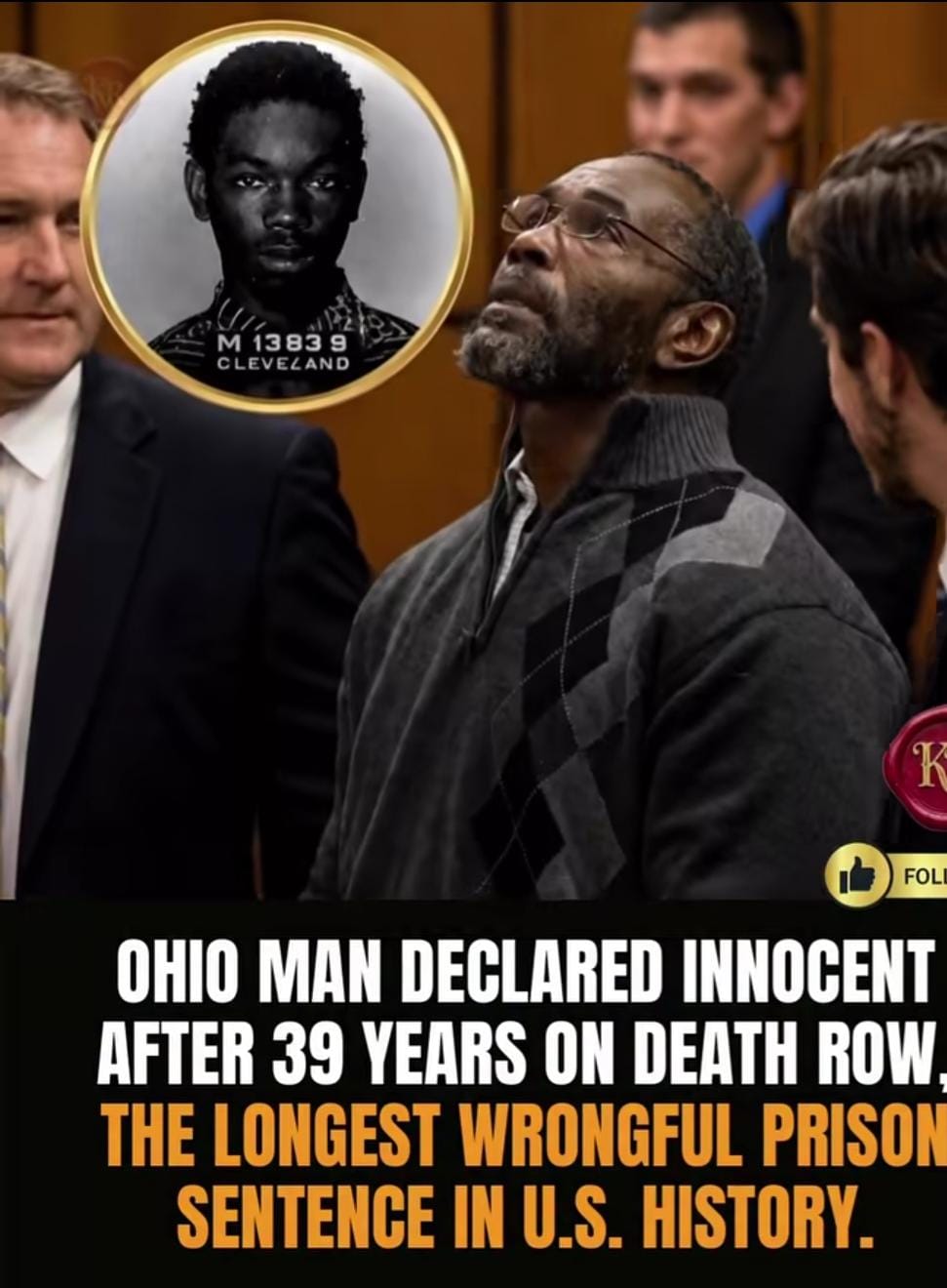
39 Years Stolen: The Tragic Story of Ricky Jackson’s Fight for Freedom
He entered prison as an 18-year-old teenager. He walked out at 57 with gray hair, a lifetime of memories lost, and a freedom that came nearly four decades too late.
In 1975, Ricky Jackson stood before a justice system that would make a catastrophic mistake. At just 18 years old, he was convicted of murder and sentenced to death based almost entirely on the testimony of a frightened 12-year-old boy. There was no physical evidence connecting Jackson to the crime. No DNA. No murder weapon. No credible proof. Yet the verdict was handed down, and the prison gates closed behind him.
What followed would become one of the most devastating wrongful imprisonment cases in American history.
For the next 39 years, Jackson lived inside the walls of a maximum-security prison, spending day after day in a concrete cell while the world beyond the bars transformed beyond recognition. He watched decades disappear. Technology advanced. Families grew. Entire generations came and went.
Meanwhile, Jackson remained trapped.
The years took an enormous toll. He missed birthdays, holidays, weddings, and countless ordinary moments most people take for granted. His mother grew older and passed away while he was incarcerated. Friends and relatives built lives without him. The hopeful young man who entered prison gradually became a middle-aged man carrying the weight of unimaginable loss.
Despite the crushing circumstances, Jackson never stopped proclaiming his innocence.
Over the years, opportunities arose that might have allowed him to leave prison earlier. But those opportunities came with a condition: admit guilt. Jackson refused. He would not falsely confess to a crime he did not commit, even if it meant remaining behind bars.
Then, nearly four decades after the conviction, everything changed.
In 2014, the key witness whose testimony had sent Jackson to prison came forward with a stunning confession. As an adult, he revealed that his childhood testimony had been false. According to his account, he had been pressured by investigators and coerced into identifying Jackson and the other defendants as the killers.
The revelation shattered the foundation of the original case.
When the truth finally emerged in court, a judge vacated Jackson’s conviction. The photograph taken during that hearing captures an unforgettable moment. As his innocence was officially restored, Jackson tilted his head upward, overcome by emotion.
It was a moment filled with relief—but also heartbreak.
No court ruling could return the 39 years that had been taken from him. No apology could restore the youth, opportunities, relationships, and experiences lost behind prison walls. The legal system could clear his name, but it could not rewind time.
Jackson had entered prison as a teenager standing on the threshold of adulthood. He emerged as a 57-year-old man facing a world that had changed dramatically during his absence.
His story remains a powerful reminder of the human cost of wrongful convictions and the devastating consequences that can result when justice fails. While Ricky Jackson eventually regained his freedom, the decades taken from him can never be returned.
Today, his life stands as both a symbol of extraordinary resilience and a sobering warning about the importance of truth, accountability, and fairness within the criminal justice system.
Some prison sentences end when the gates open.
For Ricky Jackson, the sentence ended after 39 years—but the loss will be felt for a lifetime.