
🌍 Beyond the Limit: Is Earth Already Overpopulated?
A groundbreaking new study led by Corey Bradshaw from Flinders University is sparking urgent global debate, suggesting that humanity may have already exceeded the planet’s sustainable limits.
📊 A Planet Under Pressure
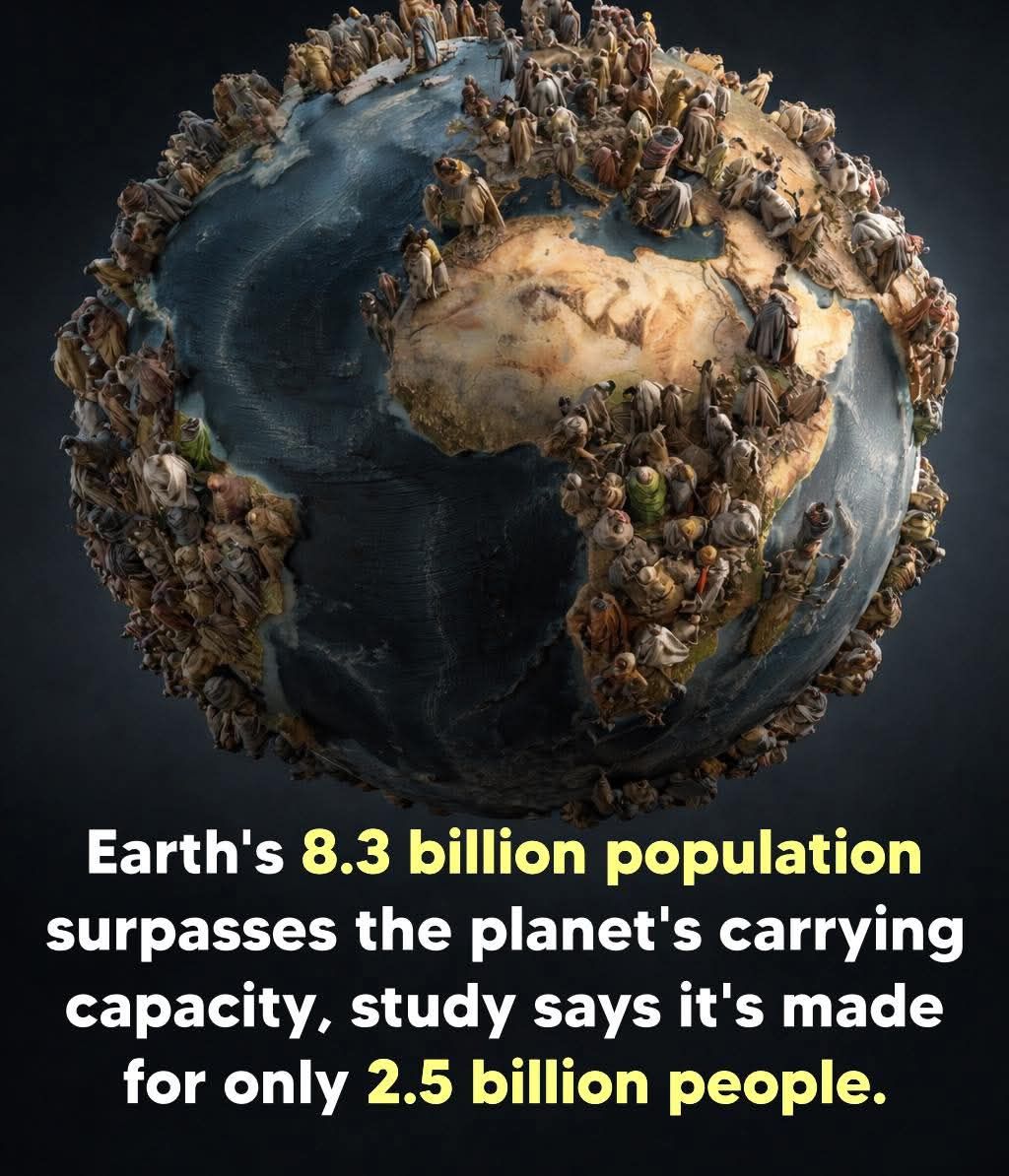
According to the research, Earth’s current population of approximately 8.3 billion people may be far beyond what the planet can support at today’s levels of consumption. The concept at the center of this discussion is carrying capacity—the maximum number of people Earth can sustain over the long term based on essential resources like food, water, and energy.
Shockingly, the study estimates that this sustainable threshold could be as low as 2.5 billion people, a figure that raises serious concerns about the future of human civilization.
⚡ The Fossil Fuel Factor
One of the key findings highlights how fossil fuels have artificially expanded Earth’s carrying capacity. By powering industrial agriculture, transportation, and modern infrastructure, these energy sources have enabled rapid population growth over the past century.
However, this expansion comes at a cost. Increased reliance on fossil fuels has intensified environmental degradation, accelerated climate change, and placed immense strain on ecosystems worldwide.
🌡️ The Climate Connection
As population numbers rise, so does the demand for resources—leading to higher greenhouse gas emissions, deforestation, and biodiversity loss. The study warns that without significant changes, these pressures could push Earth’s systems toward irreversible tipping points.
📈 Looking Ahead: 12 Billion and Beyond
With projections suggesting the global population could approach 12 billion people in the coming decades, the implications are stark. Without transformative shifts in how humanity consumes resources, produces energy, and manages ecosystems, the gap between population and sustainability will only widen.
🔄 A Call for Change
Rather than focusing solely on population numbers, the research emphasizes the importance of changing consumption patterns, improving resource efficiency, and transitioning to sustainable energy systems.
The message is clear: the future of humanity depends not just on how many people inhabit the Earth—but on how we choose to live.
🌱 Final Thought:
This study serves as a wake-up call. The challenge ahead isn’t just about survival—it’s about redefining our relationship with the planet before its limits redefine us.