

A 13-Year-Old Vanished… 10 Years Later, They Found the Truth
On December 27th, 2010, 13-year-old Hailey Dunn walked out of her home in Colorado City, Texas — and never came back. What followed was one of the most haunting, frustrating, and heartbreaking true crime investigations in the history of the Lone Star State. A case full of contradictions, shocking discoveries, a suspect who pointed investigators directly toward the county where her body would eventually be found — and a justice system that, despite everything, still has not delivered a final verdict
In the heart of West Texas, where the horizon stretches wide and the towns are small, there are stories that never leave the people who live there. Colorado City, a tight-knit community of just 4,000 residents, was once the kind of place where neighbors looked out for each other and the biggest drama was Friday night football. But all of that changed on December 27, 2010, when a 13-year-old girl named Haley Dunn vanished without a trace.
Haley was the embodiment of small-town spirit: a cheerleader, a saxophonist in the school band, a competitor in volleyball, basketball, and softball. She loved her friends, her school, and her father, Clint Dunn, so much that she crossed the street to say hello to him every day. Bright and full of life, Haley made Colorado City feel like home. That morning, she was home alone on Chestnut Street. Her mother, Billy Gene Dunn, left for work after checking in on her daughter, who was still asleep. Her brother, David, was at a friend’s house. Everything seemed normal, until it wasn’t.
The timeline of that day quickly unraveled. Shawn Atkins, Billy Gene’s boyfriend, left for work in Snyder, but cell phone records later revealed he was in Colorado City just minutes after Billy Gene left. He claimed to have gone straight to his mother’s house in Big Spring, but tower data contradicted his story. By the afternoon, Shawn’s whereabouts were uncertain, and Haley was nowhere to be found.
When David returned home, he found the front door locked and Shawn Atkins inside, looking startled and confused. That evening, Shawn told Billy Gene that Haley had left to visit her dad and planned to stay at her friend Mary Beth’s house. But Clint Dunn, Haley’s father, insisted she never came by. The next morning, Mary Beth’s parents confirmed Haley had never been there, and investigators found all of Haley’s belongings still in her room. No packed bag, no note, no plans—Haley had simply disappeared.
The missing person report wasn’t filed until the afternoon of December 28th, a full day after Haley was last seen. Police initially classified her as a runaway, a decision that would draw heavy criticism as the case unfolded. The community response was immediate and deeply personal. Volunteers organized search parties, flyers went up everywhere, and neighbors walked every road and empty lot. Clint Dunn searched relentlessly, his pain visible in every step, while Billy Gene spoke to the media but avoided the remote areas where the search for Haley’s body might lead. Shawn Atkins did not participate in any search efforts, a fact noticed and remembered by everyone.
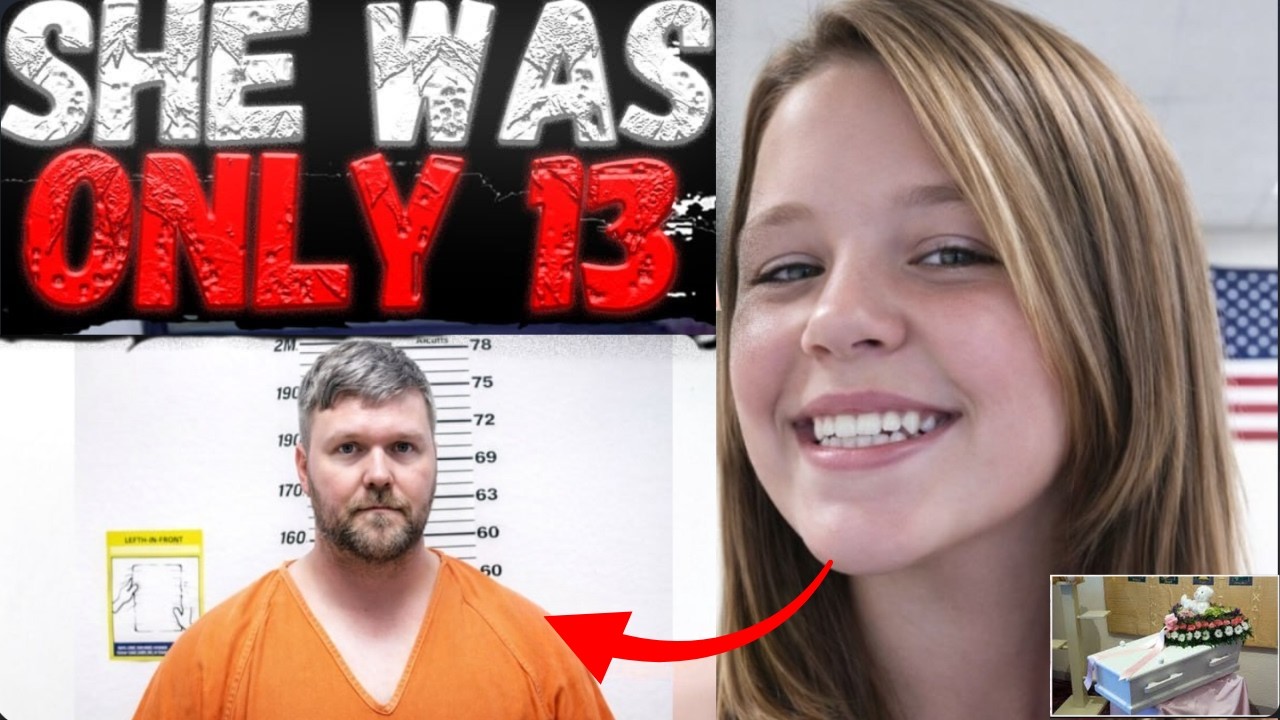
Nine days into the search, there was still no sign of Haley. Texas Rangers and the FBI joined the investigation, signaling that this was no longer a simple missing person’s case. The story caught national attention, and the reward for information grew to $25,000. Yet, in a stunning moment, a New Year’s Eve party took place in the very house Haley had vanished from, while Clint Dunn stood across the street, scanning the darkness for any sign of his daughter.
As the investigation deepened, disturbing details emerged about the home life on Chestnut Street. There were reports of heavy drinking, frequent adult parties, and a volatile relationship between Billy Gene and Shawn Atkins. Police had responded to domestic disturbances months before Haley disappeared. Haley herself reportedly did not feel comfortable around Shawn, confiding in her grandmother about being afraid and seeing shadows near her bedroom door.
Cell phone records and bank activity tore apart Shawn’s account of the day Haley disappeared. He had lied about being fired, and his phone pinged off towers in Colorado City, not Big Spring. When asked where investigators should search, Shawn pointed to Scurry County—a remote area where Haley’s remains would later be found. When asked who they should consider a suspect, Shawn answered, “Both of us.”
Polygraph tests showed indicators of deception from both Billy Gene and Shawn. Shawn refused to complete the tests, calling them a witch hunt. Yet, the answers he did give—Scurry County, both of us—were chilling. Still, there was not enough evidence for an arrest, and the searches continued.
Inside the homes connected to Billy Gene and Shawn, investigators found hundreds of printed articles about serial killers and acts of violence. More alarming, they discovered over 100,000 images involving the exploitation of minors on a USB drive and a computer. Despite this, no criminal charges were filed at the time. The evidence was complex, and the absence of immediate accountability was painful for the community.
On March 17, 2011, Billy Gene Dunn was arrested for providing false information to law enforcement after hiding Shawn in the house. She received probation and later moved away from Colorado City with Shawn, eventually separating in 2012. Over time, Billy Gene admitted she believed Shawn likely had something to do with Haley’s disappearance.
Clint Dunn never stopped searching. He posted about Haley on social media, refusing to let her story fade. In March 2013, a hiker found Haley’s remains near Lake JB Thomas in Scurry County, exactly where Shawn had said to look. DNA testing confirmed the worst. Haley had died from blunt force trauma. The case was now a murder investigation, but justice remained elusive.
Haley was not buried until January 2017, more than six years after she disappeared. The pain of waiting, of hearing the same non-answers from investigators, became a defining reality for Clint Dunn. Despite a clear prime suspect and mounting evidence, the case sat without movement for years.
In 2019, Clint’s persistent social media posts triggered a memory in a former high school student about items found years earlier, leading to new leads. Private investigator Erica Morris also received reports of disturbing online contact from a man using the name Casey—Shawn Atkins’s middle name. Despite these efforts, police initially refused to accept the complaints.
Finally, in 2021, District Attorney Ricky Thompson brought in the Texas Rangers Cold Case Unit. After reviewing all the evidence, they requested a warrant for Shawn Atkins’s DNA. On June 13, 2021, more than a decade after Haley’s disappearance, Shawn Casey Atkins was arrested and charged with her murder. The community felt hope for the first time in years.
But in June 2023, prosecutors dismissed all charges against Shawn Atkins, citing insufficient evidence. The case was built almost entirely on circumstantial evidence, with no eyewitnesses, no physical weapon, and no singular piece of forensic proof. The dismissal was called a miscarriage of justice by an investigator who had seen the evidence firsthand.
Clint Dunn, undeterred, continues to fight for his daughter. Haley Dunn’s case remains an active cold case with the Texas Rangers, and Shawn Casey Atkins is still the named suspect. A Crimestoppers reward of $3,000 is offered for information leading to an arrest. Billy Gene Dunn continues to deny any involvement, and Erica Morse has not walked away from the case.
Colorado City has not forgotten Haley Dunn. Small towns have long memories, and the people remember her with grief, guilt, and a refusal to move on until the truth is fully told. This was not a case without evidence or direction. From the beginning, investigators knew who they were looking at, but justice remains just out of reach—a problem with real consequences for a real family in a real town.
Haley Dunn was born August 28, 1997. She loved her friends, her school, and her father. She deserved far better than the fate she was given and far better than the justice system has delivered. The case is still open. The suspect is still named. The family is still fighting. Somewhere out there, someone knows something that could change everything.
If you have any information about Haley Dunn’s disappearance and murder, the Texas Rangers Cold Case Unit is still receiving tips. The Crimestoppers line remains open. Clint Dunn is still posting, still calling, still fighting for his daughter—every single day since December 28, 2010. Because that is what a father does, and that is what Haley Dunn deserves.