
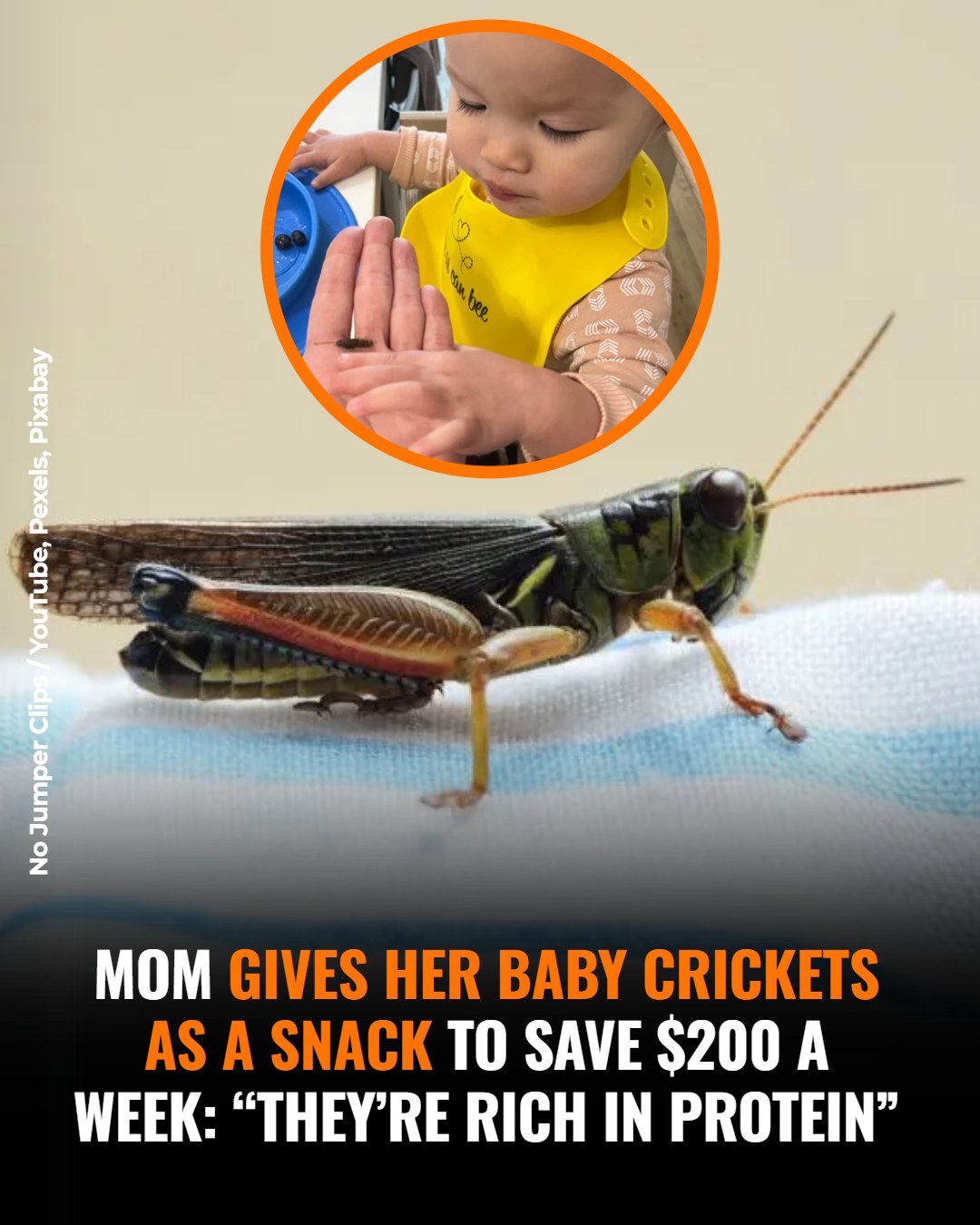
A Viral Feeding Choice Sparks Debate: A Canadian Mother, Crickets, and the Cost of Living
A recent social media revelation by Tiffany Leigh has ignited widespread conversation online, after she shared that she feeds her 18-month-old baby crickets as a regular snack. What began as a personal parenting and budgeting decision has quickly evolved into a polarizing discussion about nutrition, affordability, and modern food choices.
A Cost-Conscious Decision
In her posts, Leigh explained that the rising cost of groceries played a major role in her decision to explore alternative protein sources. According to her, incorporating crickets into her child’s diet allows her to save an estimated $150 to $200 per week on food expenses—an amount she described as significant in the current economic climate.
For Leigh, the decision isn’t just about saving money. She emphasizes that crickets are a nutrient-dense food, rich in protein and other essential nutrients, and sees them as a practical addition to her child’s diet rather than an unusual one.
Nutrition Meets Innovation
Edible insects, including crickets, have long been recognized in various parts of the world as a sustainable and protein-rich food source. In recent years, they’ve gained attention in Western markets as an eco-friendly alternative to traditional livestock, requiring fewer resources such as water and land.
Leigh’s approach reflects a growing trend among some families who are exploring unconventional dietary options not only for financial reasons but also for sustainability. Supporters of insect-based diets often highlight their high protein content, low environmental impact, and potential role in addressing global food security challenges.
Divided Public Reaction
Despite the nutritional arguments, Leigh’s choice has sparked mixed reactions online. Some viewers have praised her for thinking outside the box and prioritizing affordability without compromising on nutrition. Others, however, have expressed concern or discomfort, questioning the suitability of insects in a young child’s diet.
The debate highlights a broader cultural divide: while insect consumption is normalized in many regions around the world, it remains unfamiliar—and sometimes controversial—in others.
Parenting in a Changing Economic Landscape
Beyond the headlines, Leigh’s story underscores a reality many families face: navigating rising living costs while trying to maintain a balanced and healthy diet for their children. For some, unconventional solutions like insect-based foods may represent a practical adaptation to financial pressures.
Whether viewed as innovative, practical, or unconventional, Leigh’s decision has opened up a wider conversation about how families adapt their lifestyles in response to economic challenges—and how food traditions continue to evolve in a globalized world.
As the discussion continues, one thing remains clear: what’s on the plate is no longer just about taste or tradition—it’s also about sustainability, affordability, and the changing definition of what it means to eat well.