Oklahoma State Bureau of Investigation Attorney Faces Scrutiny After Viral TikTok Videos
An attorney employed by the Oklahoma State Bureau of Investigation (OSBI) has come under intense public scrutiny after videos from her personal TikTok account circulated widely online, sparking political debate and calls for accountability.
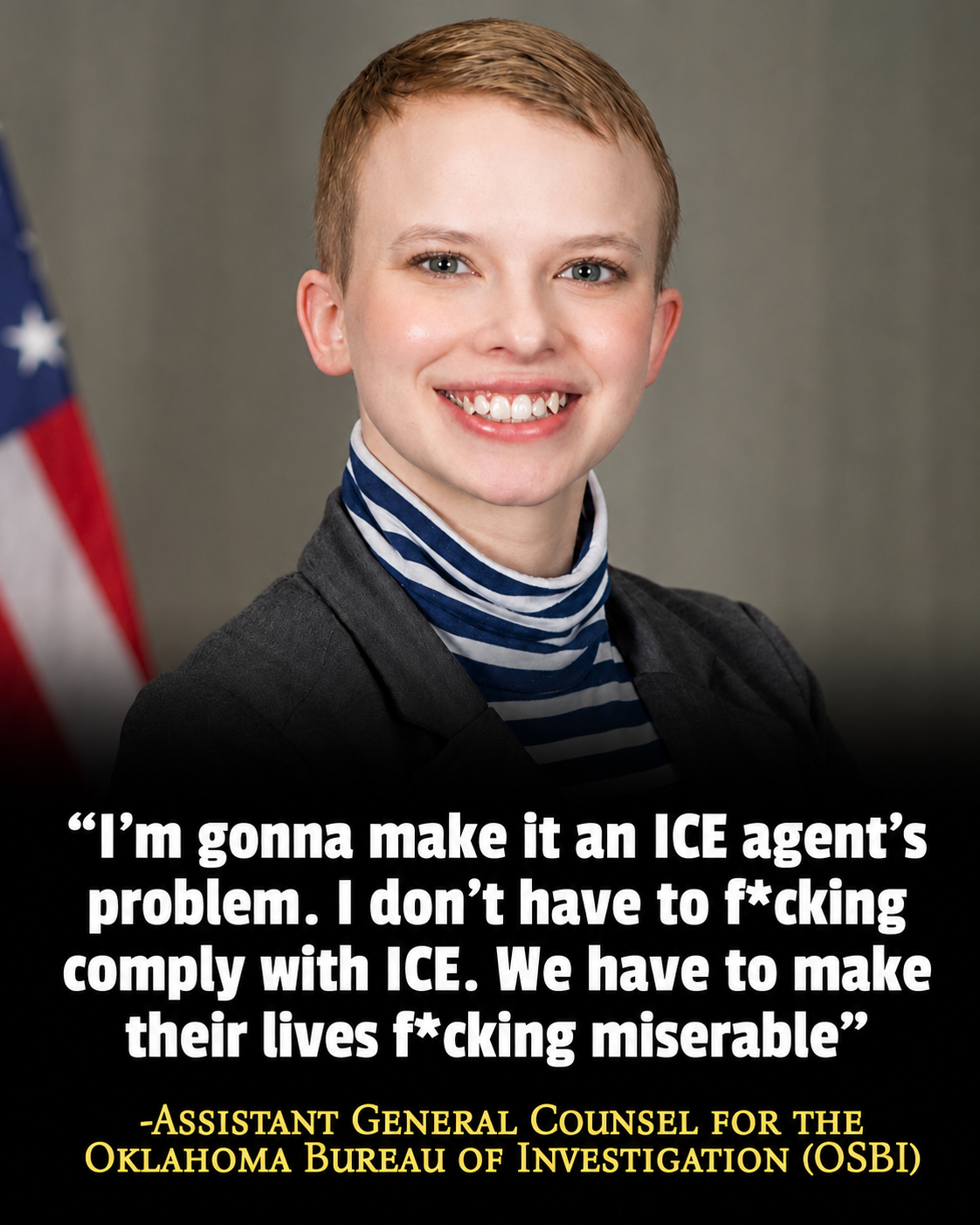
Shannon Desherow, who serves as an Assistant General Counsel for the OSBI, became the center of controversy after a compilation of videos resurfaced across social media platforms. In the clips, she appeared to criticize U.S. Immigration and Customs Enforcement (ICE) while encouraging resistance to the agency’s activities.
Among the statements attributed to Desherow were:
“I’m gonna make it an ICE agent’s problem. I don’t have to fcking comply with ICE… we have to make their lives fcking miserable.”
The videos quickly spread online, generating thousands of reactions and prompting criticism from political commentators, public officials, and social media users who questioned whether someone serving in a government legal position should make such remarks publicly.
Attorney General’s Office Clarifies Employment Status
As backlash intensified, the Oklahoma Attorney General’s Office issued an official statement seeking to correct what it described as widespread confusion regarding Desherow’s employment.
The office emphasized that Desherow is not employed by the Oklahoma Attorney General’s Office in any capacity.
Officials explained that while she has represented the Oklahoma State Bureau of Investigation on collaborative state boards alongside other agencies, she remains an employee of the OSBI, an independent state investigative agency, rather than the state’s top legal office.
The clarification was intended to distinguish her role within Oklahoma state government after numerous online posts incorrectly identified her as an attorney working directly for the Attorney General.
Debate Over Public Officials and Social Media
The controversy has reignited broader discussions about the responsibilities of government employees on social media, particularly those serving in legal or law enforcement-related positions.
Supporters of stronger accountability argue that public officials should exercise caution when making statements that could undermine confidence in the impartiality of their offices. Others maintain that government employees retain First Amendment rights to express personal political opinions outside of their official duties, subject to applicable workplace policies and ethical standards.
At the time of publication, no public announcement had been made regarding any disciplinary action by the Oklahoma State Bureau of Investigation concerning the videos.
As the discussion continues, the incident highlights the increasingly blurred line between personal social media activity and professional public service in the digital age.