
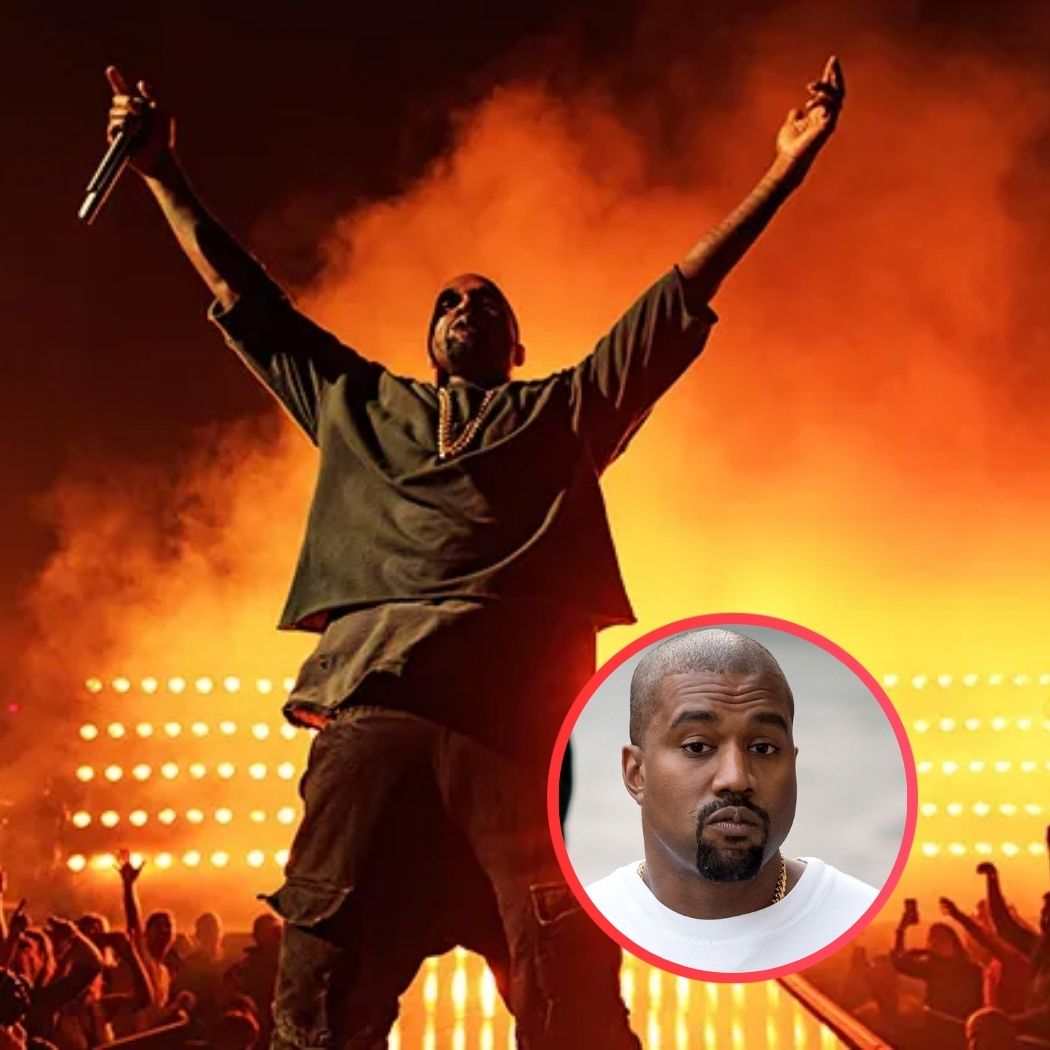
KANYE WEST SUDDENLY POSTPONES FRANCE SHOW… FANS LEFT STUNNED A highly anticipated concert in France was abruptly put on hold.
The attempted return of Kanye West—now known as Ye—to the global stage has encountered another obstacle, this time in Europe, where a planned performance in France has been abruptly postponed amid mounting political and public pressure.
The rapper had been scheduled to take the stage on June 11 at the iconic Stade Vélodrome in Marseille, a venue more commonly associated with major football matches and large-scale international events. The concert was expected to mark a significant moment in Ye’s ongoing efforts to reestablish himself beyond the United States following a series of controversies that have reshaped his career in recent years.
However, in a brief statement shared on social media platform X, Ye confirmed that the show would not proceed as planned. He framed the decision as a personal one, writing that he had chosen to postpone the performance “until further notice” after “much thought and consideration.” The message also hinted at a broader narrative of redemption, with the artist acknowledging that rebuilding trust takes time and emphasizing what he described as a sincere effort to make amends.

Behind that carefully worded announcement, though, a more complex situation had been unfolding. French authorities had already signaled their opposition to the event, raising the prospect that the concert might not be allowed to take place at all. Laurent Nuñez publicly stated that officials were exploring every available option to prevent the performance, reflecting the seriousness with which the issue was being treated at a governmental level.
The controversy surrounding Ye’s planned appearance in France cannot be viewed in isolation. It is the latest chapter in a broader series of setbacks that have followed the artist across international borders. Earlier in the month, officials in the United Kingdom confirmed that Ye would not be permitted entry, a decision that led to the cancellation of an entire major music event where he had been slated to headline. The fallout from that situation extended beyond immigration restrictions, as several high-profile corporate sponsors—including global brands—withdrew their support, effectively undermining the viability of the event.
These developments are rooted in a pattern of public statements and actions that have drawn widespread condemnation. Ye has faced intense criticism for remarks perceived as endorsing extremist ideologies, including comments referencing Nazi symbolism and Adolf Hitler. The backlash intensified following the release of controversial material and merchandise that many viewed as deeply offensive. The cumulative impact has been significant, affecting not only public perception but also his professional relationships and access to international platforms.
In an apparent attempt to address the damage, Ye issued a public apology earlier this year in the form of a full-page advertisement published in The Wall Street Journal. In that statement, he attributed his past behavior to struggles with bipolar disorder, describing a prolonged period marked by what he characterized as manic and erratic actions. He acknowledged the consequences of that period, stating that it had caused profound disruption in his personal and professional life.
Despite these efforts at reconciliation, the response from institutions and governments has remained cautious, if not outright resistant. The situation in France illustrates the extent to which concerns about Ye’s presence extend beyond entertainment and into the realm of public policy and social responsibility. For officials, the question is not merely whether an artist can perform, but whether allowing such an event aligns with broader societal values and public sentiment.
At the same time, Ye’s commercial appeal has shown signs of resilience, particularly in the United States. Recent performances in Los Angeles reportedly generated tens of millions of dollars in revenue, underscoring his continued ability to draw large audiences despite ongoing controversies. This contrast—strong domestic performance versus international resistance—highlights the uneven terrain of his attempted comeback.
The postponement of the Marseille concert therefore sits at the intersection of multiple forces: an artist seeking redemption, governments responding to public pressure, and an industry grappling with the implications of controversy in a globalized market. While Ye’s statement presents the delay as a voluntary decision, the broader context suggests that external factors played a decisive role.
For fans, the uncertainty surrounding the show raises immediate questions about whether it will be rescheduled or quietly abandoned. For industry observers, it offers a case study in how reputational crises can transcend borders, influencing not only audience reception but also regulatory decisions.
More broadly, the episode reflects a shifting landscape in which cultural figures are increasingly subject to scrutiny not just for their artistic output, but for their public conduct and the messages they convey. In this environment, the path to rehabilitation is neither straightforward nor guaranteed, particularly when controversies intersect with deeply sensitive historical and political issues.
As Ye continues to navigate this რთական phase of his career, the postponement in France serves as a reminder that rebuilding a global presence requires more than commercial success. It demands a level of public trust that, once eroded, can prove difficult to restore—especially under the watchful eye of governments, institutions, and an increasingly vocal international audience.