
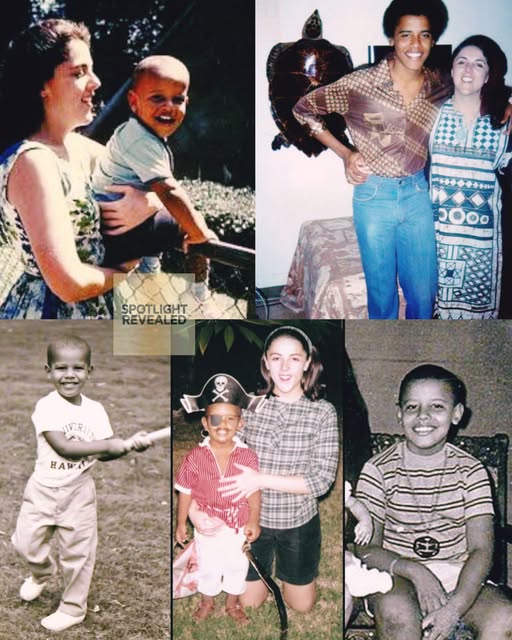
A SON, A MOTHER, AND THE TIDE THAT NEVER STOPS TURNING
By the time the world came to know Barack Obama as a symbol of hope, resilience, and history in motion, he had already endured a quieter, more intimate loss—one that would shape him long before the spotlight ever did.
The Woman Behind the Story
On November 7, 1995, in Honolulu, Ann Dunham passed away after a battle with ovarian cancer. She was just 52 years old—twenty-two days shy of her 53rd birthday.
To the world, she was an anthropologist, a pioneering thinker immersed in microfinance research across Southeast Asia. To her son, she was everything steady in a life often marked by movement and uncertainty.
Her illness began quietly. In late 1994, while in Jakarta, she felt a sharp stomach pain during dinner. A local doctor dismissed it as indigestion. By the time she returned to the United States and sought care at Memorial Sloan-Kettering Cancer Center, the diagnosis was devastating—uterine cancer that had already spread.
A Fight on Two Fronts
Back in Hawaii, Ann faced not only the physical toll of her illness but an equally grueling battle with her insurance company, which attempted to deny her disability benefits by labeling her cancer a “preexisting condition.”
Even in her final months, the fight was relentless—pain, bureaucracy, and the quiet courage of a woman who had spent her life helping others navigate hardship.
A Son’s Unfinished Words
At the time of her passing, Obama was 34—already a graduate of Harvard Law School, already laying the groundwork for a political future in Chicago.
But none of that shielded him from grief.
He had been writing his memoir, Dreams from My Father, during her illness. Years later, in its 2004 preface, he revealed a lingering regret: had he known she would not survive, he might have written a different book—one less focused on the father who was largely absent, and more on the mother who had always been there.
It was one of his most vulnerable admissions. He wrote that he could not fully express how deeply he still mourned her, and that whatever was best in him came from her.
Where Memory Meets the Ocean
After a memorial service at the University of Hawaii, Obama and his half-sister Maya carried out a final act of love.
At Lanai Lookout on Oahu’s southern shore, they scattered Ann Dunham’s ashes into the vast Pacific. The ocean—endless, rhythmic, and unyielding—became her resting place.
More than a decade later, on December 23, 2008, just weeks after making history as president-elect, Obama returned to that same spot. This time, he came to honor another woman who had shaped him: his grandmother, Madelyn Dunham.
Standing at the water’s edge once more, he released her ashes into the same sea.
The Legacy That Remains
In that quiet moment—far from crowds, cameras, and history books—stood a man shaped not just by ambition or destiny, but by love, loss, and the women who raised him.
The presidency would define Barack Obama for the world.
But at Lanai Lookout, he was simply a son—returning, remembering, and letting go.
And in the sound of the waves, perhaps, carrying forward everything they had given him.